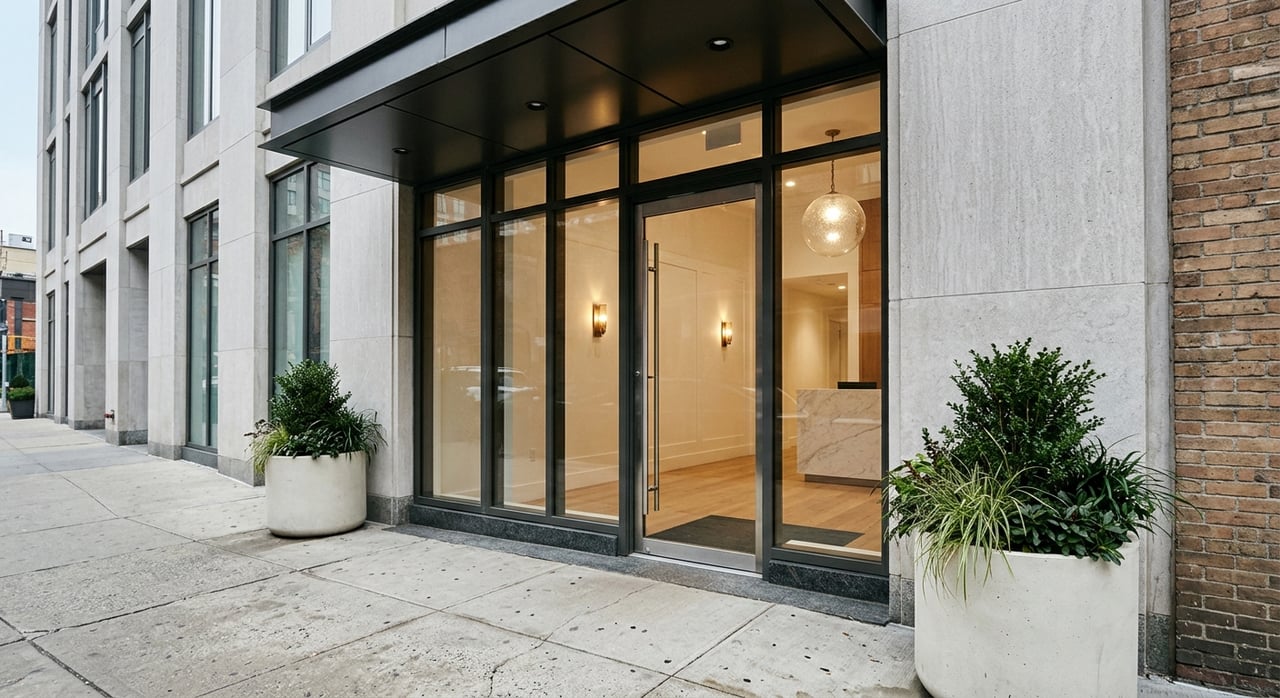
Understanding The Downtown Brooklyn Condo Market Today
April 2, 2026
April 2, 2026
If you are looking at condos in Downtown Brooklyn, you are not just shopping for square footage. You are weighing price, building style, monthly costs, transit access, and how much convenience matters in your day-to-day life. In a market filled with high-rise towers and steady new development, it helps to know what is actually happening before you make a move. Let’s dive in.
Downtown Brooklyn stands out as one of Brooklyn’s most development-heavy residential areas. According to StreetEasy’s Downtown Brooklyn neighborhood data, the neighborhood currently shows a median sale price of about $1.1 million, a median base rent of $4,450, and a median of 79 days on market for sales listings.
That gives you an important starting point. This is not a bargain-basement condo market, but it is also not a place where every listing disappears overnight. If you are buying here, you are entering a market with a relatively high price floor, solid demand, and a lot of attention on building quality and amenities.
A big reason buyers continue to focus on Downtown Brooklyn is convenience. StreetEasy notes that the neighborhood has 13 subway lines and access to Downtown Manhattan in as little as 10 minutes on the 2/3 or N/Q/R trains, which makes it one of the most connected parts of Brooklyn.
That transit network supports everyday livability and long-term housing demand. Official MTA station information also shows strong connectivity through Jay St-MetroTech, DeKalb Av, and Borough Hall, linking the area to multiple lines across the city.
The neighborhood itself is busy and highly urban. StreetEasy describes Downtown Brooklyn as bustling during the day and quieter after work, with limited green space beyond Cadman Plaza. For many buyers, that tradeoff makes sense because they are prioritizing access, services, and newer housing stock.
If you want to understand how Downtown Brooklyn condos feel on the ground, it helps to zoom out to the broader Brooklyn market. In Q4 2025, Douglas Elliman’s Brooklyn report showed a median condo sales price of $1.09 million, 3.9 months of supply, and a median of 59 days on market.
That same report found that 22.5% of Brooklyn condo sales involved bidding wars, with an average premium of 6% over last asking price, while the median listing discount was just 1.6%. In plain terms, the market was competitive, but not chaotic. Buyers still had opportunities, but well-priced listings continued to draw strong interest.
Corcoran’s Q4 2025 Brooklyn market report points in the same direction. Inventory improved modestly, yet it remained 18% below the 10-year fourth-quarter average, and new-development inventory fell 15% year over year to a 10-year low. That helps explain why polished, move-in-ready condos still tend to stand out.
Downtown Brooklyn is heavily influenced by new construction. The Downtown Brooklyn Partnership’s October 2025 report counted 163 completed projects since the 2004 rezoning, totaling 26,853 housing units, with 2,829 units under construction and 4,029 planned.
That pipeline is a major part of the neighborhood story. The same report says Downtown Brooklyn delivered 3,703 residential units in 2025 alone, with 1,183 more expected by year-end. A separate Downtown Brooklyn Partnership storymap also noted that the area has added over 22,000 housing units since rezoning and experienced 57% population growth.
For you as a buyer, that means inventory here often looks different from what you may find in more low-rise Brooklyn neighborhoods. Instead of small-scale buildings and limited turnover, Downtown Brooklyn gives you a larger mix of recently built towers, amenity packages, and more frequent new inventory entering the market.
One of the biggest decisions in Downtown Brooklyn is whether you want a newer condo or a resale unit. In the broader Brooklyn market, Elliman reported that new-development condos made up 29.7% of all condo sales in Q4 2025, with a median sale price of $1.2375 million, which was above the overall Brooklyn condo median of $1.09 million.
Corcoran also reported that Brooklyn’s new-development median price reached a record $1.4 million. That pricing gap suggests that buyers are often paying a premium for newer construction.
In practical terms, newer Downtown Brooklyn towers may appeal to you if you want a more turnkey experience, larger common areas, and a fuller amenity package. A resale condo may offer a different value equation depending on the unit’s condition, layout, and building quality. Neither choice is automatically better. It really comes down to your budget, lifestyle, and tolerance for future updates or renovation.
In Downtown Brooklyn, amenities are not just a bonus. In many buildings, they are part of the baseline expectation. According to StreetEasy’s 2025 year-in-review, in-unit laundry remained the most desired amenity among New Yorkers.
StreetEasy also defines amenity-rich buildings as those with in-unit laundry, a dishwasher, an elevator, and a doorman, plus a gym or pool. In a neighborhood known for larger multifamily towers, you should expect many listings to highlight these features.
That matters when you compare properties. If one condo lacks features that are common in nearby buildings, buyers may notice quickly. On the other hand, if you are willing to compromise on certain amenities, you may find opportunities at a more approachable price point.
Downtown Brooklyn is a strong condo market, but renting remains a real alternative. StreetEasy reported that in July 2025, Downtown Brooklyn had 679 rental units on the market with a median asking rent of $4,531. In January 2026, it also said the neighborhood had 214 new rentals in buildings completed just the year before, the most of any NYC neighborhood.
That steady rental supply gives buyers another benchmark to consider. If you are deciding whether to buy now or continue renting, monthly ownership costs need to be compared against not just mortgage payments, but also taxes, closing costs, and the value you place on stability and long-term equity.
Because rent levels are still high, some buyers see ownership as a way to lock in a home and build long-term value. Others may decide the flexibility of renting makes more sense for now, especially if they want more time to save for closing costs.
This is one area where Downtown Brooklyn buyers need to pay close attention. Bank of America explains that typical mortgage closing costs can include title insurance, attorney fees, appraisals, taxes, and similar charges, often totaling about 3% to 5% of the loan amount. You can review that overview in its guide to common mortgage closing costs.
For NYC condo buyers, there are also local and state taxes to account for. The city’s Real Property Transfer Tax applies to transfers over $25,000, and for residential condo units the rate is 1% up to $500,000 and 1.425% above $500,000, as cited in the same Bank of America resource.
New York State also says the buyer pays a 1% mansion tax on residential purchases of $1 million or more. You can confirm that through the New York State transfer tax guidance. Since the median sale price in Downtown Brooklyn is already about $1.1 million, many purchases in the neighborhood will cross that threshold.
If you are financing, mortgage recording tax is another cost to plan for. The New York City Department of Finance process referenced by New York State confirms that mortgage recording tax applies when mortgages are recorded in the city, with the exact rate depending on the mortgage amount.
The key takeaway is simple: in Downtown Brooklyn, closing costs are not a minor line item. They can materially affect how much cash you need to close and how you compare buying versus renting.
If you are shopping in Downtown Brooklyn today, focus on a few core factors before you fall in love with a unit.
A condo in a newer tower and a condo in an older resale building can look similar on paper but feel very different in real life. Pay attention to amenities, monthly carrying costs, finish quality, and how much future maintenance or updating may be needed.
Your decision should not be based on purchase price alone. You will want to weigh mortgage payments, common charges, taxes, and the upfront closing-cost burden, especially if the purchase price pushes you over the mansion-tax threshold.
With median days on market in Downtown Brooklyn around 79 days on StreetEasy, not every listing is moving at the same speed. If a property has been sitting, it may open the door for negotiation, but you should still look closely at condition, pricing, and comparable options.
Even in a market that is not at peak frenzy, strong listings still perform well. Corcoran and Elliman data both suggest that quality inventory remains limited enough that well-priced, move-in-ready condos can attract meaningful competition.
Downtown Brooklyn’s condo market today is best understood as a high-rise, transit-connected, new-development-heavy market with premium pricing and practical tradeoffs. You get convenience, strong transit access, and a wide range of newer housing options, but you also need to be prepared for higher costs and a more urban setting.
If you are buying here, the smartest move is to think beyond the listing photos. Look at the building, the amenity package, the resale versus new-development premium, and the full cash needed to close. That is where better decisions usually come from.
If you want help making sense of condo options in Brooklyn and building a strategy around your budget, timeline, and goals, connect with The Valvo Team. You will get straightforward guidance grounded in real market data and local perspective.
Stay up to date on the latest real estate trends.

We pride ourselves in providing personalized solutions that bring our clients closer to their dream properties and enhance their long-term wealth.