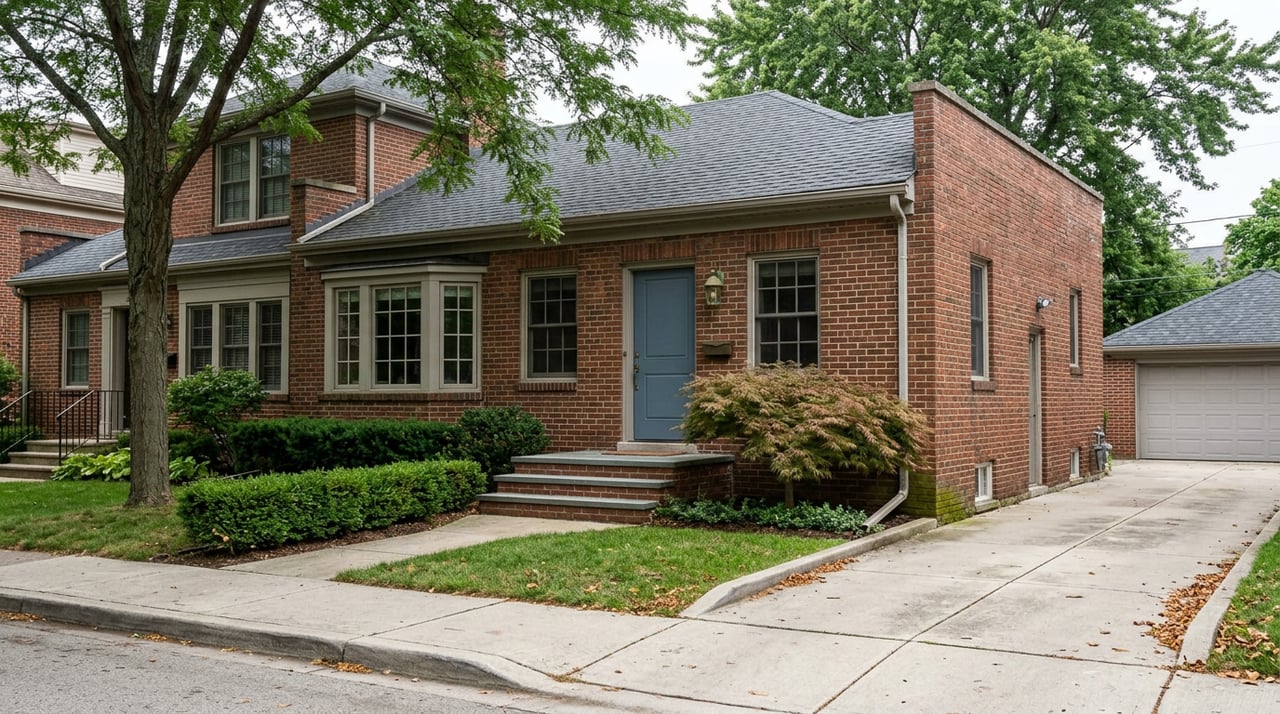
How the Interborough Express Could Affect Flatlands Home Prices
September 24, 2026
September 24, 2026
A few brokers working the Midwood and Kensington corridor have started floating a version of the same line to buyers this year: get in now, before the train drives prices up. The train in question is the Interborough Express, the light rail line the MTA wants to build between Bay Ridge and Jackson Heights. It's a real project with real momentum. It is also, as of this month, still five years from carrying a single rider, according to the person who runs the MTA.
That gap between the pitch and the timeline is the whole story for Flatlands right now. If you're weighing a purchase in a neighborhood that has spent decades without a subway stop, the IBX is worth understanding clearly, not as a reason to rush, but as a reason to know exactly what you're paying for today versus what you might be paying for on faith.
As amNY reported, MTA Chair and CEO Janno Lieber told reporters at a Ridgewood pop-up event on September 9 that the Interborough Express will take at least five years to complete, even with the design phase moving faster than the agency expected. That's not a construction estimate. That's the floor, offered by the man overseeing the project, at an event where the state was actively trying to build public enthusiasm for it.
The mechanics behind that number matter. The design phase started in the summer of 2025 and is expected to run through 2027. The Draft Environmental Impact Statement, the regulatory step that has to clear before construction can even be scheduled, is now due before the end of 2026, which is sooner than originally planned but still just a draft for public comment, not a groundbreaking. Riders Alliance policy director Danny Pearlstein put it plainly when he said five years is a long time to wait, and what riders actually need is confidence that each day inside that window represents real progress rather than another delay.
Then there's the money. The project costs an estimated $5.5 billion. The MTA's 2025-2029 Capital Plan covers $2.75 billion of it, almost exactly half. Governor Hochul has said she's committed to closing that gap, but she's also acknowledged that federal funding, which looked plausible under the previous administration, looks far less likely under the current one. None of this means the IBX won't get built. It means the timeline any buyer should be working from is "operational sometime in the early 2030s, funding still incomplete," not "arriving soon."
Flatlands isn't a bystander in the IBX conversation. It's one of the neighborhoods the project is explicitly built around. Council Member Farah Louis, whose district includes Flatlands, has called the line a lifeline for communities like East Flatbush, Flatlands and Canarsie that have historically been cut off from mass transit. MTA materials describe the corridor's purpose in the same terms, naming Flatlands directly as one of the underserved areas the line is meant to reach.
The preliminary station list backs that up geographically. Two of the planned stops, Remsen Avenue and Utica Avenue, sit on corridors that run directly through this part of Brooklyn. Utica Avenue is one of Flatlands' own named commercial streets, the kind of road residents already use for groceries, banking and errands. That doesn't guarantee a station will land exactly where it's most convenient for every Flatlands block, and the MTA has been clear that final station locations won't be locked until later in the design process. But it does mean the neighborhood has a real, named stake in a real, funded-half project, which is more than most transit rumors ever offer.
Flatlands has never had its own subway station. Residents rely on buses to reach the Nostrand Avenue line or the Brighton line, and that absence shows up in price. Living in a New York City neighborhood without a direct subway stop typically means paying noticeably less for comparable housing than you would in a subway-connected pocket of the same borough, and Flatlands has priced that way for years, sitting toward the more affordable end of Brooklyn alongside East Flatbush, Brownsville and East New York.
That discount is the thing a buyer is actually purchasing right now. It's not speculative. It shows up in closed sales today, in a neighborhood where houses, co-ops and the occasional condo trade well below the borough median. The IBX, if it opens on schedule in the early 2030s, might eventually erode that discount the way new transit access has in other outer-borough neighborhoods. But erode is the right word. It's a multi-year process tied to construction visibly happening, not to a rendering released at a press conference.
Here's where a Flatlands purchase gets genuinely tricky, and it has nothing to do with trains. Pull Flatlands median home price data from four different sources this year and you get four different neighborhoods.
| Time window | Source type | Reported median |
|---|---|---|
| April 2026 | Public-records tracker, single-family houses | $701K |
| Q2 2026 | Same tracker, all property types blended | $385K |
| May 2026 | Local buyer's guide snapshot, all types | $455K |
| February 2026 | Listings site, multi-family homes | $699K |
| September 2026 | Live listings portal, current inventory | $725,500 |
That's not four sources disagreeing about the same thing. It's four sources measuring different slices of a market that doesn't generate enough sales in any single quarter to produce a stable number. Flatlands houses, co-ops and multi-family properties trade in different price tiers, and when the mix of what sold shifts from one month to the next, so does the headline median, sometimes by hundreds of thousands of dollars.
If an agent or a portal hands you a single Flatlands median and treats it as gospel, ask what property type it's measuring and over what window. In a market this thin, the honest answer to "what's a home worth here" is never a single number pulled off a chart. It's a comp set built from actual recent closings on properties that match what you're buying, house to house or co-op to co-op.
Put those two pieces together and the picture for a Flatlands buyer looks less like urgency and more like patience with upside attached. You're buying into a neighborhood priced, in part, for the absence of a subway. You're also buying into a neighborhood the state has named as a direct beneficiary of a $5.5 billion transit project that's half funded and still years from breaking ground.
That second part is real, but it behaves like an option, not a guarantee. Brokers quoted discussing the IBX's effect on property values have acknowledged it's hard to point to outright losses along transit corridors, since values along new transit lines generally rise over time. Housing advocates working the corridor, including Barika Williams of the Association for Neighborhood and Housing Development, have raised a fair concern from the other direction: that rising interest in these neighborhoods needs to be paired with protections so it doesn't price out the people who've lived there through the transit-desert years. Both of those things can be true. Neither of them means the appreciation shows up before the tracks do.
If you're buying, treat today's price as what it is: a fair reflection of a neighborhood without direct subway access, not a discount that's about to vanish next quarter. Build your offer around recent, comparable closings, not a headline median from a source that might be measuring a different slice of the market than the home you're looking at.
If you're selling, don't lean on the IBX in your pricing conversation. It's a legitimate long-term story for the neighborhood, but it isn't a comp, and buyers doing their homework will know the difference between a funded transit line and a proposed one.
Either way, the train is worth watching. The Draft Environmental Impact Statement due later this year will be the first real look at where stations land and what construction actually requires. Until then, Flatlands is priced for the neighborhood it is today, not the one it might become once the tracks are laid.
If you want a clear read on what your Flatlands property is actually worth in this market, comps and all, The Valvo Team will walk you through it street by street. Request a free home valuation and get numbers built from real closings, not a portal's best guess.
Stay up to date on the latest real estate trends.


We pride ourselves in providing personalized solutions that bring our clients closer to their dream properties and enhance their long-term wealth.